




What's Actually Happening on Your Skin When Your Shave
If you've spent years rotating between razors, aftershaves, and ingrown-hair creams trying to figure out why your skin is angry every morning… the problem isn't your skin.
It's your razor. And I'll prove it.
I'll also show you why dermatologists have been quietly recommending the same fix for decades, even as the big razor companies have spent billions convincing you that more blades equal a better shave.
The opposite is true.
Why OneBlade’s Single-Edge Razor Beats Multi-Blade for Anyone With Sensitive Skin
Pick up the blade cartridge in your bathroom. Look at it closely. Those four blades aren't there to cut your hair four times. Instead, they're there to do something more aggressive than that: The first blade lifts the hair away from the follicle. The second, third, and fourth blades cut it, below the surface of the skin.
The cartridge companies call this "lift-and-cut."
It's an engineering miracle of a sort. It produces the closest shave possible on the first pass. But it also produces the conditions for everything you hate about shaving.
Because when you cut hair below the surface of the skin, that hair has to grow back through the skin.
Sometimes it does but sometimes it curls and grows sideways. That's an ingrown. The body treats the trapped hair as a foreign object and inflames the area around it. That's where the razor bump comes from.
Multiply that by four blades dragging across your skin every week for years, and it’s no surprise your skin is raw, inflamed, and irritated. And you could continue this way forever or you could just change your razor.

What Dermatologists Actually Recommend
Here's the part the razor companies don't put in their ads.
The American Academy of Dermatology, the Mayo Clinic, and other board-certified dermatologists who treat shaving-related skin conditions all recommend the same thing for those with sensitive skin:
Use a single-blade razor.
Forefront Dermatology puts it plainly:
"Multi-blade razors lift and cut hair below the skin line. They have great marketing promising the smoothest shave, but they're terrible for anyone prone to ingrown hairs."
Dr. Mona Foad, a board-certified dermatologist tells her patients the same thing:
"A single-blade razor can be a good option for people with sensitive skin or those who are prone to razor bumps and ingrown hairs…
Multi-blade razors are designed to give a very close shave but because they lift and cut the hair below the skin surface, they can sometimes increase irritation and ingrown hairs."
The Mayo Clinic's official ingrown-hair guidance? “Use a sharp, single-blade razor."
This isn't fringe advice or marketing speak, it's the standard of care.
And it's been the standard of care for as long as multi-blade cartridges have existed… it’s just been overshadowed by billions in marketing spend from the big razor companies.
The 1998 Confession
In 1998, The New Yorker ran a long piece on the engineering history of the Gillette Sensor... the razor that started the whole "more blades equals better" arms race.
Deep in the piece, one of the original cartridge designers admitted something that should have ended the multi-blade era right there: "What you gained in efficiency you lost in comfort, irritating the skin too much."
That's not a critic. That's one of the men who designed the cartridge razor saying, on the record, that the closer shave came at a real cost.
Three decades later, that cost is still being paid every morning by every man who walks into a dermatologist's office complaining about razor burn.

Why a Single Blade Doesn't Have the Problem
A single-edge razor doesn't lift and cut. It cuts… once.
At the level of the skin and that changes everything because… No sub-surface cutting means no trapped hair growing sideways. Fewer passes mean less friction, less micro-tearing of the skin barrier.
A single sharp blade does in one stroke what four dull blades do in three. The hair tip ends up flat and short, not the curl-back-into-the-skin spear shape that multi-blade cartridges leave behind.
Men's Health magazine ran a thirty-day single-blade experiment in 2017 and reported the same result the dermatologists predict:
"After my first single-blade shave, there was some redness, but the irritation wasn't puffy like it had been with a multi-blade razor. By the third or fourth shave, I wasn't seeing ingrown hairs anymore."
Put another way: your skin irritations calms down within a week… ingrowns disappear in about thirty days… razor burn becomes the thing you used to get, not the thing you fight every morning.

What to Look For in a Sensitive-Skin Single-Edge Razor
Not every single-edge razor is built for sensitive skin. There’s three things that matter that most razors miss:
1. A pivoting head.
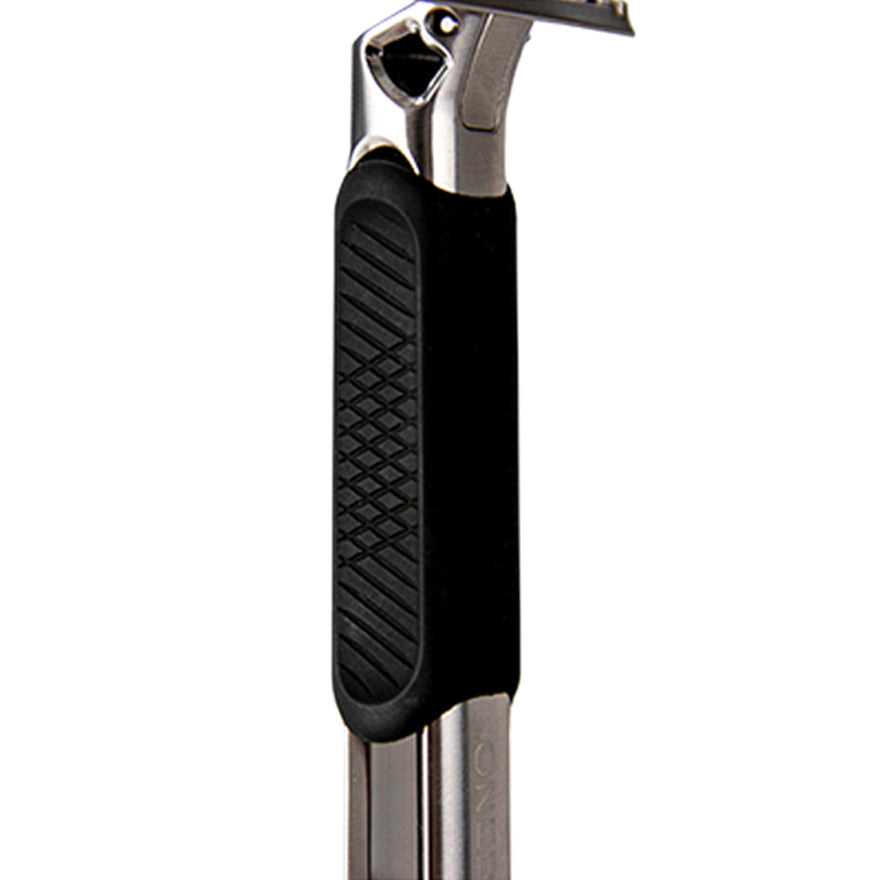
A fixed-head razor punishes you for any mistake in angle. You need skill to use it. But a head that pivots and that follows the contours of your jaw, neck, and chin… it keeps the blade at the right angle even when your hand isn't perfect. Less pressure. Less irritation. Less cuts.
2. A heavy, well-balanced handle.
With a single edge, the weight of the razor does the cutting. You shouldn't have to press. Pressing is one of the single biggest cause of razor burn among new single-edge users. A heavier handle teaches your hand to let go.
3. A sharp, single-edge blade.
Not a double-edge cut in half. A real single-edge blade is engineered to do one job. Most double-edge razors share the blade… both edges are cut to the same standard, which is a compromise. A single-edge blade can be ground sharper, coated more durably, and finished more precisely. That precision is what turns "good" into "no irritation at all."
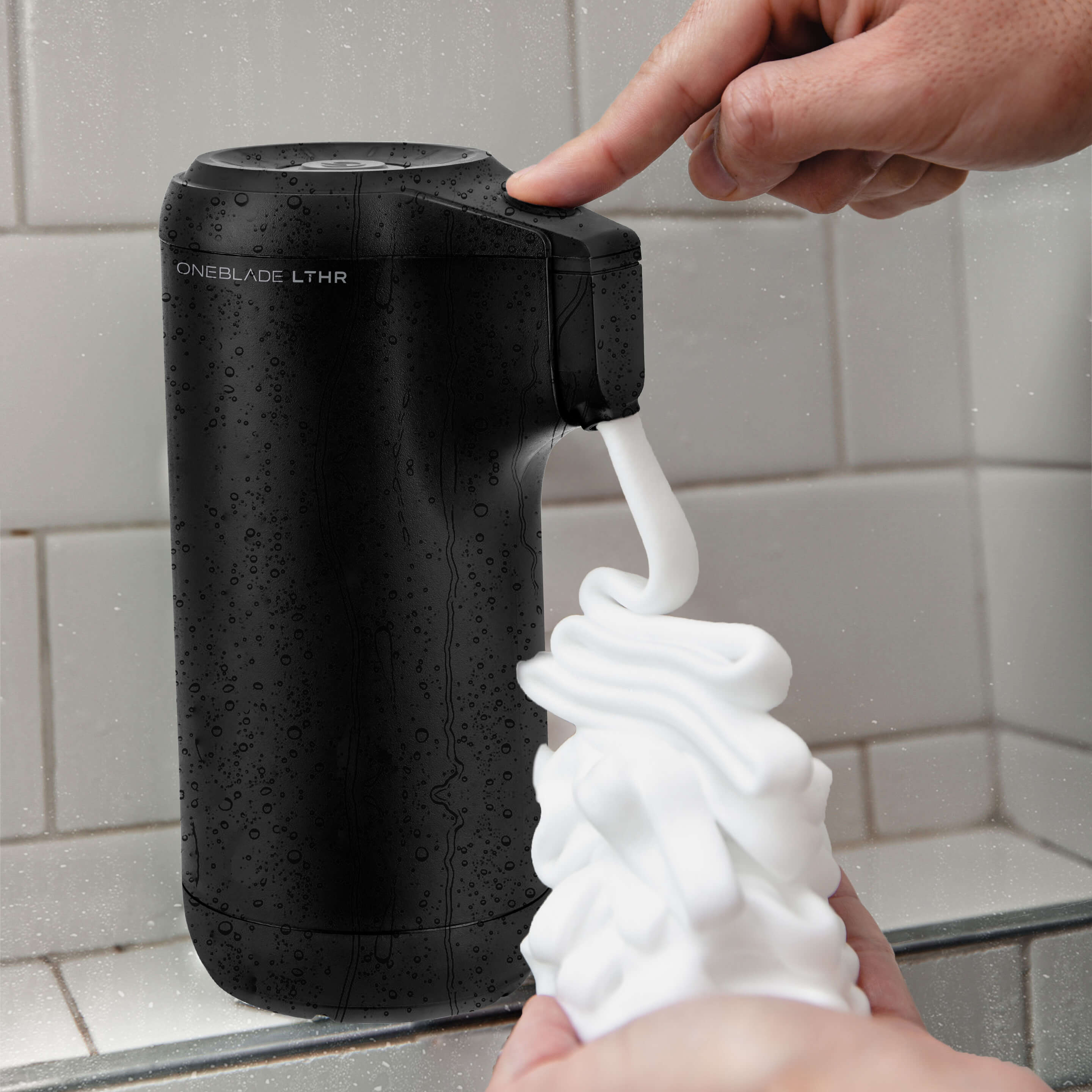
The Razors We Built for This Problem
It has the patented pivoting head OneBlade is known for. The same head that's on our flagship Genesis razor, which Sharpologist has called "the world's best razor."
We back our razors with a sixty-day risk-free trial, our zero-irritation guarantee, and a forever warranty.
And most of our customers tell us the same thing: it takes about a week to learn the technique, and within a month, they don't recognize their skin anymore.
If you're curious whether OneBlade would work for you, the best way to find out is to try one. Browse all OneBlade razors and kits to find the right starting point.